By Avni YayinUpdated
Coaster types are not an official list: manufacturers and fans name them by the track (wood or steel, a rail or a trough), the train (sit-down, hanging below the rail, seats on wings) and the way the ride gets its energy (a lift hill or a launch). The same names are used in parks around the world, and Park Baron’s twelve cover the families you’ll meet most.
In the game every type has its own maximum height, friction, train, price and excitement bonus, and some can do things others can’t: only types with inversions take loops and corkscrews (Steel Looping Coaster, Inverted Coaster, Launched Coaster and Wing Coaster), only some take vertical drops and top hats (Launched Coaster, Giga Coaster and Wing Coaster), and only the small ones take the tightest turns (Junior Coaster, Wild Mouse and Spinning Coaster).
The 12 roller coaster types
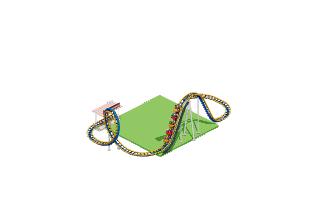
Steel Looping Coaster
Smooth steel track that can do vertical loops and steep drops. Tubular steel track made the modern looping coaster possible. The first modern coaster with a teardrop (clothoid) vertical loop opened in 1976.
More about the Steel Looping Coaster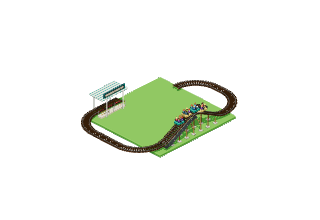
Wooden Coaster
Classic clattering wooden coaster: no inversions, lots of airtime. The oldest kind still built: a timber structure and track, famous for its rattle and its airtime hills. Classics such as Coney Island’s Cyclone (1927) still run.
More about the Wooden Coaster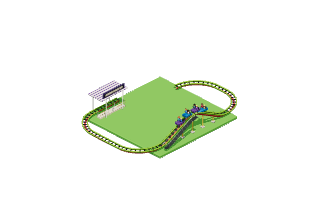
Junior Coaster
Gentle family coaster. No steep slopes or loops — kids welcome! A family coaster: low, slow and gentle, for riders too small for the big ones. Often a child’s first coaster.
More about the Junior Coaster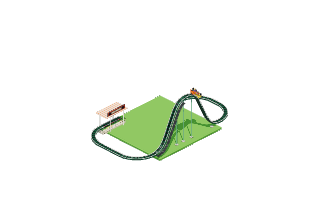
Wild Mouse
Little cars zig-zag through hairpin turns and sudden dips. No inversions. Small cars for a handful of riders take sharp hairpin turns right at the edge of the track and sudden short dips, a design that goes back to the mid-20th century.
More about the Wild Mouse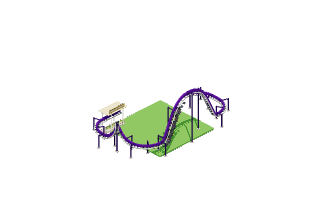
Inverted Coaster
Riders hang beneath the rail with their feet dangling — loops and corkscrews welcome. The train hangs below the rail with the riders’ feet dangling. The first coaster of this kind, built by Bolliger & Mabillard, opened in 1992.
More about the Inverted Coaster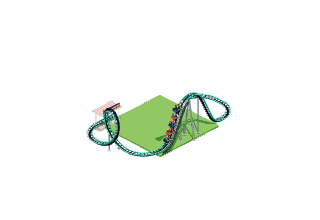
Launched Coaster
Linear motors fire the train out of the station — up a towering top hat and back down. Instead of a lift hill, motors in the track or a hydraulic catapult fire the train out of the station, often up a tall “top hat” hill.
More about the Launched Coaster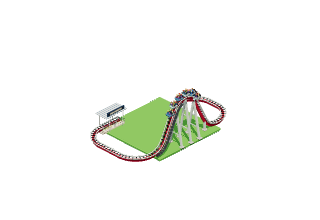
Giga Coaster
A towering airtime machine: huge drops, vertical plunges, fast hills. No inversions. The industry name for a coaster with a height or drop of at least 300 feet (91 m). The first opened in 2000; Park Baron’s may climb 157 m.
More about the Giga Coaster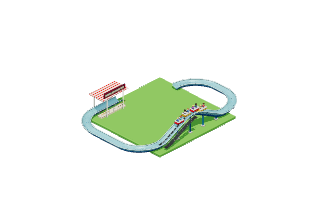
Bobsled Coaster
Sleds swoop freely through a banked half-pipe trough. Cars run freely in a half-pipe trough instead of on fixed rails, like a bobsleigh on an ice run.
More about the Bobsled Coaster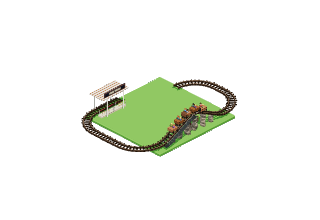
Mine Train
A runaway ore train rattling over rustic rails on timber trestles and rock. Themed as a runaway mine train: rustic rails, rock work and timber trestles, with long turns rather than big drops.
More about the Mine Train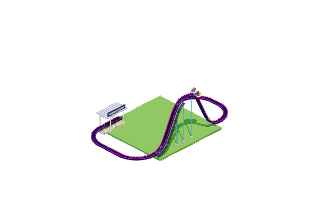
Spinning Coaster
Round cars spin on their own axis as they take tight turns and dips. Round cars turn freely on a turntable, so each ride spins differently as the car takes the curves.
More about the Spinning Coaster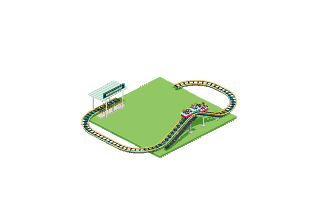
Water Coaster
Boats that ride a coaster track and plough through splash pools. Boats ride a coaster track and splash down through pools of water, part coaster, part flume.
More about the Water Coaster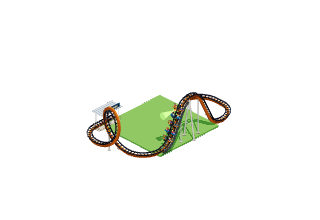
Wing Coaster
Riders sit on wings either side of the track with nothing above or below them: huge rolls, loops and vertical drops. Riders sit on wings either side of the track, with nothing above or below them. The first opened in Italy in 2011.
More about the Wing CoasterChoosing a type in the game
Start small: the Junior Coaster and the Wild Mouse are cheap and fit in a corner of a young park. Wooden and Mine Train coasters bring big excitement for their price without inversions, which families accept. The Steel Looping, Inverted and Wing coasters add loops and corkscrews for thrill-seekers, while the Giga and the Launched Coaster are the showpieces of a rich park.
Every type comes with three ready-made designs (a starter, a crowd-pleaser and a showpiece), and you can save your own. See the whole list with prices on the rides page.